
Views: 67 Author: Site Editor Publish Time: 2025-12-08 Origin: Site
A dependable rescue boat crane—also globally recognized in the maritime industry as a rescue boat davit—is critical to emergency preparedness on any modern vessel. Whether you're retrofitting an aging fleet, equipping new builds to the latest SOLAS standards, or upgrading for operational reliability, understanding the features, compliance requirements, and best selection practices for these lifting systems is essential.
This guide clarifies the real-world context: "rescue boat crane" and "rescue boat davit" are interchangeable terms describing the same equipment—a launching appliance for safe deployment and recovery of rescue boats under varied sea conditions. You will learn what distinguishes high-quality rescue boat crane/davit systems, why fast rescue boat deployment demands enhanced davit specifications, how to evaluate different mechanical architectures, and how to select, operate, and maintain solutions optimized for your vessel's specific requirements.

Rescue Boat Crane, Rescue Boat Davit—One System, Two Names
In marine equipment, the terms "rescue boat crane" and "rescue boat davit" refer to virtually the same system: dedicated lifting appliances designed for safe launch and recovery of rescue boats under diverse conditions.
Rescue Boat Davit: The formal term in SOLAS/IMO codes and technical documentation for a fixed or slewing arm lifting device that deploys and recovers a fully equipped rescue boat from a ship's deck to the water and back.
Rescue Boat Crane: Used widely by manufacturers, operators, and suppliers as a practical designation because the equipment functions identically to a specialized crane—slewing, lifting, controlled lowering, and winching.
In maritime procurement, there is no functional difference between these terms. The terminology choice reflects user preference and regional industry practice, not equipment classification.
Core Davit System Types Used for Rescue Boat Operations
Davit systems serving rescue boat deployment vary significantly in mechanical architecture and operational capability. Understanding these real distinctions—rather than simplified categories—enables accurate equipment specification and procurement decisions.
Single-Arm Davit (Rescue Boat Application)

The most widely installed configuration on SOLAS commercial vessels, particularly for standard rescue boats in space-constrained environments:
Single rotating horizontal arm controlled by hydraulic slewing motors.
Compact deck footprint—ideal for smaller working areas or retrofits.
Safe working loads (SWLs): 14kN to 25kN+ (1.4–2.5+ metric tons).
Power modes: electric main drive, manual hydraulic hand pump, and accumulator emergency backup.
Gravity-controlled descent rates per SOLAS: 40–60 m/min.
Hoisting speeds: minimum 18 m/min for standard rescue boat operations.
Operational capability under SOLAS adverse conditions: 10° trim, 20° list, ship headway up to 5 knots.
Preferred for general rescue boat deployment on merchant vessels, OSVs, and support ships worldwide. New Marine's single-arm davits exemplify this category, offering proven reliability across thousands of marine installations.
A-Frame Davit Configuration

Designed for fast rescue boat deployment, higher loads, and operations demanding advanced wave compensation and faster winching speeds:
Twin luffing arms arranged in "A" geometry providing superior structural strength and reduced boat swing.
SWLs: typically 25kN–50kN+ depending on vessel class requirements.
Hoisting capability ≥48 m/min—essential for fast rescue boat rapid recovery.
Integrated constant-tension and shock-absorber systems for safe launch/recovery in rough seas.
Wave compensation devices maintaining controlled wire rope tension across sea state variations.
Typically requires more deck space than single-arm systems but delivers superior performance for demanding applications.
Standard selection for offshore platforms, FPSOs, specialized rescue operations, fast patrol craft, and vessels requiring enhanced emergency response capability. A-frame systems are often the baseline choice for fast rescue boat davit specifications.
Gravity Davit Systems (Lifeboat-Primary, Limited Rescue Boat Use)

While primarily designed for lifeboat operations, gravity davits merit mention because maritime professionals occasionally encounter these types on mid-age or specialized vessels:
Pivot or luffing-arm davits relying on gravity for descent (powered hoisting for recovery).
Manual or hydraulic-assisted operation depending on vessel configuration.
Generally lower hoisting speeds and SWLs compared to powered rescue boat systems.
More common on older vessels; modern rescue boat requirements typically demand powered systems.
Rarely specified for new rescue boat applications due to speed and capability limitations.
Platform and Integrated Davit Systems

Larger vessels sometimes employ platform davits integrating launch and storage systems for combined lifeboat-plus-rescue-boat operations—custom-engineered per vessel specifications and class requirements. These systems provide operational flexibility and maximize deck utilization on constraint-limited vessels.
What Makes Davit Systems Suitable for Fast Rescue Boats?
A critical distinction must be clarified: fast rescue boat davits are not a separate regulatory class. Rather, davit systems serving fast rescue boat operations must meet enhanced performance specifications established by SOLAS and LSA Code.
Enhanced Specification Requirements for Fast Rescue Boat Service
Fast rescue boats themselves carry specific operational mandates:
Hull length: 6–8.5 meters (vs. standard rescue boats: 3.8–8.5 meters)
Speed capability: ≥20 knots with 3-person crew sustained 4 hours; ≥8 knots fully loaded
Self-righting design mandatory
Internal or outboard engine required
Fully equipped with survival systems, communications, and medical equipment
How Fast Rescue Boat Davit Systems Meet the Requirements
The davit systems supporting fast rescue boat deployment must therefore deliver significantly enhanced performance:
Hoisting speed ≥0.8 m/s (48 m/min) vs. standard rescue boat requirement of ≥0.3 m/s (18 m/min).
Wave compensation devices (constant-tension systems) enabling safe recovery in significant swell and sea state conditions.
Shock absorbers reducing impact forces during launch entry and recovery cycles, protecting boat structure and crew.
Electronic safety interlocks and limit systems preventing operator error during high-speed operations.
Superior structural rigidity handling dynamic forces from faster, heavier rescue boats under demanding sea conditions.
Redundant power modes ensuring launch capability even during electrical system failure—critical when rapid deployment is required.
Davit systems meeting these specifications are typically A-frame or advanced single-arm configurations engineered to higher performance thresholds. The key point: you are not choosing a different davit class, but rather specifying davit systems with elevated performance capabilities.

Rescue Boat Davit System Must-Haves for Compliance & Safety
To achieve maritime authority acceptance, rescue boat crane/davit systems (regardless of name) must satisfy rigorous international standards:
Meet SOLAS and LSA Code mandates: Launch capability with up to 10° trim, 20° list, ship making 5 knots headway, fully loaded rescue boat with complete crew and equipment.
Obtain class society type approval: CCS, BV, ABS, LR, RMRS, NK, or equivalent recognized authority certification and load testing.
Ensure fail-safe emergency operation: Accumulator-hydraulic backup power enabling launch during complete electrical system failure—critical for true emergency scenarios.
Provide redundant control systems: Both ship-deck and rescue-boat-mounted remote controls for descent phase operation, enhancing crew safety during deployment.
Demonstrate proven safety performance: Brake testing at 1.5× maximum working load; structural testing to 2.2× SWL; wire rope inspection per SOLAS requirements.
Classification society oversight is not merely bureaucratic—these independent technical reviews identify design flaws, manufacturing defects, and operational hazards that could compromise safety during actual emergency deployment.
Selecting the Right Rescue Boat Crane/Davit: Practical Checklist
1. Define Vessel Requirements Clearly
Rescue boat size, type (standard or fast), loaded weight, available deck installation space.
Required launch orientation (side-launch, stern, platform compatibility).
Anticipated operational profile (commercial shipping, offshore support, patrol/rescue operations).
2. Verify Complete Certification Documentation
Request current type approval certificates from recognized classification societies.
Confirm MED (Marine Equipment Directive) compliance for EU-flagged vessels.
Review compliance with your flag state's specific regulations and vessel classification requirements.
3. Review Critical Technical Specifications
SWL exceeding fully loaded rescue boat weight by 10–15% safety margin.
Hoisting/descent speeds appropriate for vessel rescue boat type (standard vs. fast).
Slewing range, control options, and corrosion-resistant material construction.
Multi-mode power: electric, hydraulic manual, and accumulator emergency capability.
4. Assess Installation Fit and Long-Term Support
Confirm the feasibility of the installation on your available deck structure.
Verify the manufacturer provides complete installation manuals, crew training, and global spares support.
Evaluate the manufacturer's track record with similar vessel types and operational profiles.
5. Prioritize Quality Construction and Aftercare
Hot-dip galvanized structure, marine-grade stainless fasteners, and three-layer protective coatings.
Easy-access service points for all hydraulic and electrical systems.
Established manufacturers with worldwide technical support networks and rapid spare parts delivery capability.

Rescue Boat Davit Operation, Maintenance & Readiness
Proper installation by qualified teams to manufacturer specification, with class surveyor approval is fundamental to safety and compliance. Poor installation undermines even the highest-quality equipment.
Typical operational sequence:
Pre-launch checks (oil, ropes, communication).
Slew arm/boom into launch position.
Controlled descent (hydraulic/electric/manual).
Quick-release hook operation and safe boat departure.
Reverse for recovery, with attention to winch, brakes, and wave motion.
Routine maintenance priorities:
Weekly visual inspections of all major components.
Monthly oil level/contamination checks.
Quarterly lubrication and limit-switch verification.
Annual wire rope measurement, accumulator pressure testing, and brake system functional testing under load.
Following routine and documented checks (ideally with digital records for class) is key to readiness and equipment longevity.
Why Choose New Marine for Rescue Boat Crane & Davit Solutions?
New Marine manufactures certified, reliable rescue boat crane/davit systems engineered to SOLAS/LSA Code across the complete operational spectrum—from compact single-arm davits for standard rescue boat operations to advanced A-frame fast rescue boat systems for demanding offshore and rescue service applications.
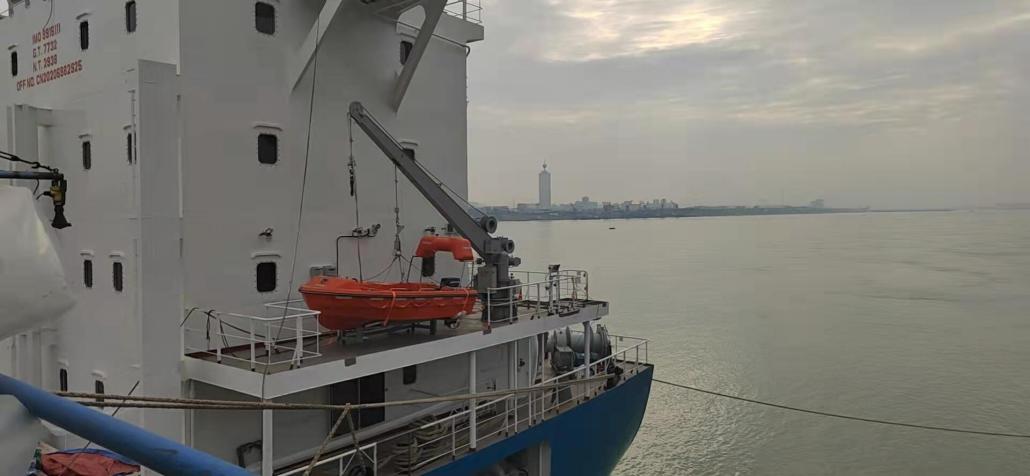
Every system includes certified type approval from major classification societies (CCS, BV, ABS, RINA, NK), redundant safety features (accumulator backup power, remote release, auto-brake), and comprehensive aftercare spanning initial specification through global technical support. New Marine's engineering expertise ensures your rescue boat crane/davit system performs reliably when maritime emergencies demand immediate action.
Conclusion: Partner with New Marine for Reliable Solutions
Selecting the right rescue boat crane (rescue boat davit) system requires balancing technical specifications, regulatory compliance, and long-term operational reliability. Whether you choose a single-arm davit for standard rescue boat operations or an A-frame system for fast rescue boat deployment, prioritize certified, modern, and field-proven equipment from world-class manufacturers like New Marine.
Safety at sea starts with the right equipment, expertly maintained and ready for the real world. Contact the New Marine team for a custom solution tailored to your rescue boat applications.


